Modern software development moves fast. Features are released frequently, integrations evolve constantly, and customer expectations continue to rise. In this environment, delivering reliable backend applications is no longer just about writing clean code—it’s about ensuring that code continues to work as the application grows.
For Node.js applications, a well-defined testing strategy is one of the most important investments a development team can make. Whether you’re building APIs, microservices, e-commerce platforms, booking systems, or enterprise applications, testing provides the confidence needed to scale development without compromising quality.
In this article, we’ll explore why every Node.js backend needs a testing strategy, the types of testing that matter, and how testing contributes to long-term business success.
The Cost of Untested Code
Many development teams prioritize feature delivery over testing, especially during the early stages of a project. While this may accelerate initial development, it often creates challenges later.
Without testing, common issues include:
- Production bugs affecting customers
- Unexpected failures after deployments
- Reduced developer confidence
As applications become more complex, even small changes can unintentionally impact existing functionality. A simple modification to a service layer, database query, or validation rule can introduce regressions that are difficult to identify without automated tests.
Testing acts as a safety net, allowing teams to detect issues before they reach production.
Why Testing Matters in Node.js Applications
Node.js powers many business-critical applications, from SaaS platforms and enterprise systems to travel booking engines and e-commerce solutions.
These applications often include:
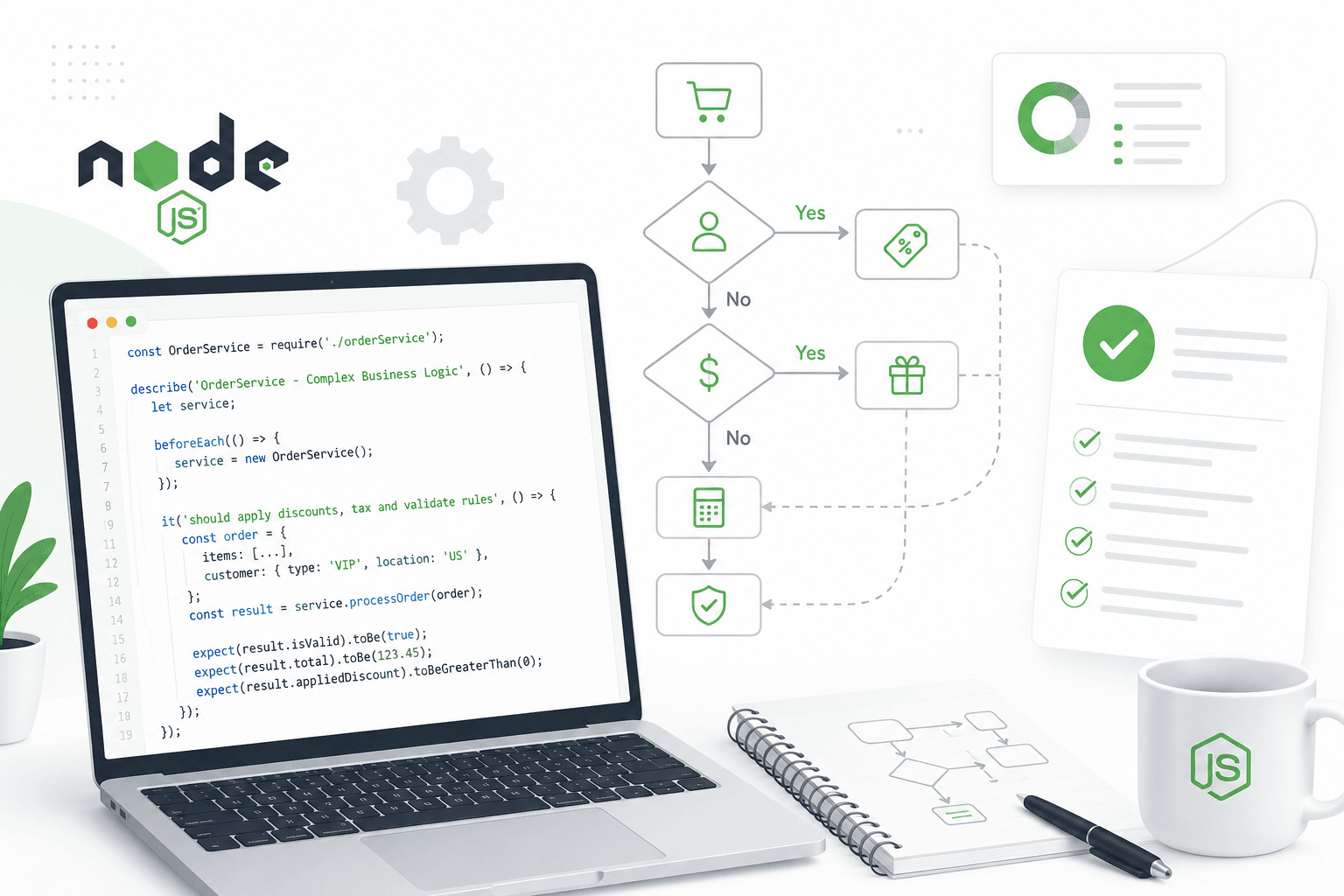
- Business rule validations
Each component introduces potential failure points.
A comprehensive testing strategy helps verify that these systems continue to function correctly as new features are added and existing functionality evolves.
Types of Testing Every Node.js Project Should Include
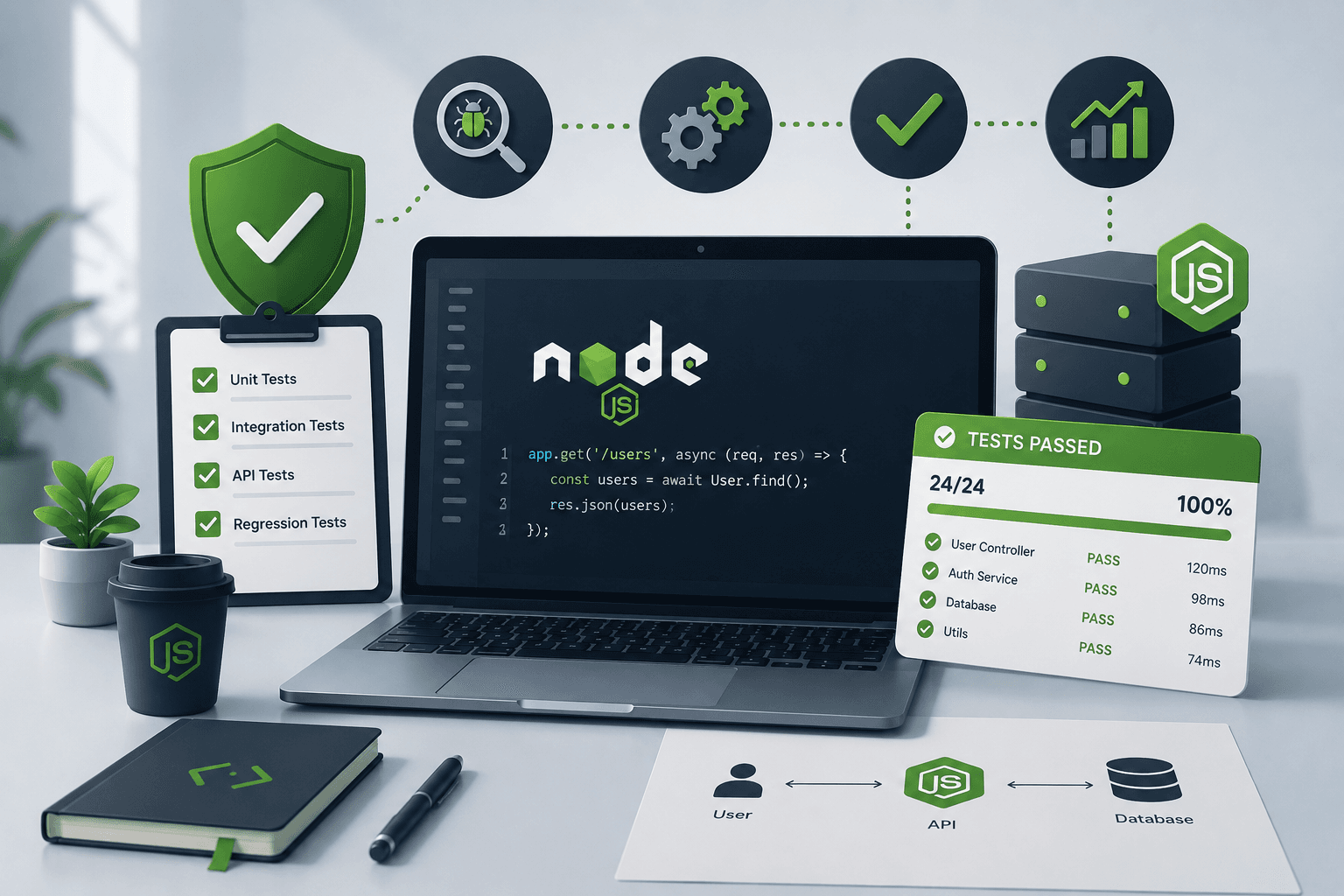
Unit Testing
Unit tests validate individual functions, methods, and business logic in isolation.
Examples include:
- Price calculation functions
Unit tests are fast, reliable, and provide immediate feedback during development.
Popular tools:
Integration Testing
Integration tests verify that different parts of the application work together correctly.
Examples include:
- API and database interactions
- Service-to-service communication
- Repository layer validation
These tests help identify issues that unit tests alone may not catch.
API Testing
API testing ensures that endpoints return the correct responses under various conditions.
Typical scenarios include:
Tools commonly used:
End-to-End Testing
End-to-end tests simulate real user workflows.
Examples:
Although slower than unit tests, they provide valuable confidence in critical business processes.
Testing Improves Development Speed
One common misconception is that testing slows development.
In reality, the opposite is often true.
When developers have confidence in their test suite, they can:
- Reduce manual testing efforts
- Spend less time debugging
Teams that invest in testing typically achieve higher development velocity over time because they spend less effort fixing regressions.
Building Maintainable Node.js Applications
As backend systems grow, maintainability becomes increasingly important.
Testing encourages better architecture by promoting:
Applications designed with testability in mind are generally easier to maintain and scale.
For example, business logic stored within service classes is significantly easier to test than logic embedded directly within API controllers.
The Role of Testing in CI/CD Pipelines
Modern development teams rely heavily on Continuous Integration and Continuous Deployment (CI/CD).
A typical deployment pipeline may include:
- Code commit
- Automated test execution
- Code quality checks
- Build generation
- Deployment
Automated testing serves as a quality gate before code reaches production.
Without testing, deployment becomes a higher-risk activity that depends heavily on manual verification.
Focus on Business-Critical Functionality
Not every line of code requires extensive testing.
Instead, prioritize areas that directly impact business operations:
High-Priority Testing Areas
- Authentication and authorization
Testing these areas significantly reduces business risk.
Common Testing Mistakes to Avoid
Chasing Coverage Numbers
High code coverage does not necessarily mean high-quality tests.
The goal should be validating meaningful business behavior rather than simply increasing coverage percentages.
Testing Implementation Details
Tests should verify outcomes, not internal implementation.
This makes refactoring easier and keeps tests resilient.
Ignoring Edge Cases
Many production issues occur at boundary conditions.
Always test:
Over-Mocking
While mocking is useful, excessive mocking can reduce confidence in system behavior.
Balance isolation with realistic testing scenarios.
Real Business Benefits of Testing
Organizations that implement strong testing practices often experience:
- Fewer production incidents
- Improved customer satisfaction
- Greater developer productivity
- Easier onboarding of new team members
Testing is not merely a technical practice—it delivers measurable business value.
Final Thoughts
A successful Node.js backend is not defined solely by the features it offers. It is defined by its reliability, maintainability, and ability to evolve without introducing unexpected issues.
A comprehensive testing strategy provides the confidence needed to build, scale, and maintain modern applications effectively.
Whether you’re managing a startup product, enterprise platform, or high-traffic API ecosystem, testing should be treated as a core engineering practice rather than an optional task.
The earlier a testing culture is established, the easier it becomes to deliver reliable software at scale.