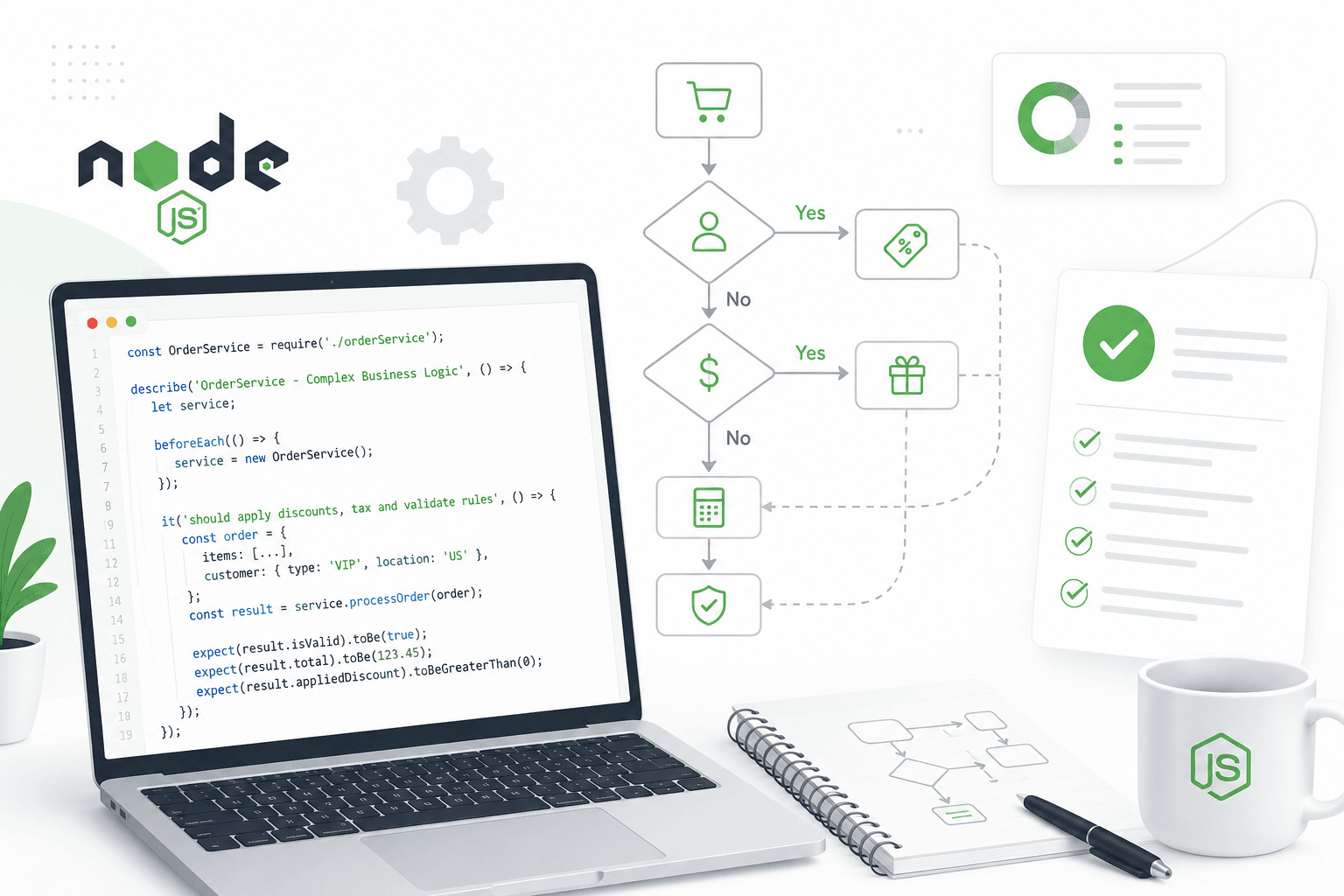
When developers think about testing, the focus is often on API endpoints, database operations, or response status codes. While these areas are important, the most critical part of any application is usually the business logic that drives it.
Business logic determines how an application behaves. It controls pricing calculations, approval workflows, user permissions, booking rules, notifications, eligibility checks, and countless other processes that directly impact users and business operations.
In Node.js applications, testing complex business logic is essential for maintaining reliability, reducing production defects, and ensuring that business requirements continue to work as expected as the application evolves.
In this article, we’ll explore why testing business logic matters, common challenges developers face, and best practices for building reliable test suites in Node.js applications.
What Is Business Logic?
Business logic refers to the rules and processes that define how an application should operate.
Unlike API routes or database queries, business logic represents the actual requirements of the business.
Examples include:
- Calculating product discounts
- Determining booking eligibility
- Applying seasonal pricing rules
- Processing approval workflows
- Assigning user permissions
- Calculating taxes and fees
- Sending notifications based on specific events
- Validating complex application rules
These processes often contain multiple conditions, dependencies, and edge cases, making them some of the most error-prone parts of an application.
Why Business Logic Requires Special Attention
Many production issues originate from business rule failures rather than technical failures.
Consider the following scenarios:
- A customer receives an incorrect discount.
- A booking is approved when it should be rejected.
- A notification is sent to the wrong user.
- A pricing calculation excludes applicable taxes.
- An unauthorized user gains access to restricted functionality.
These issues may not cause application crashes, but they can have significant financial and operational consequences.
Testing business logic helps ensure that critical business processes remain accurate and predictable.
Keep Business Logic Out of Controllers
One of the most common mistakes in Node.js applications is placing business logic directly inside controllers.
For example:
// Not Recommended
async function createBooking(req, res) {
// validation
// pricing calculation
// discount logic
// tax calculation
// notification sending
// database operations
}
As requirements grow, controllers become difficult to maintain and nearly impossible to test effectively.
A better approach is to move business logic into dedicated service classes.
// Recommended
class BookingService {
async calculateBookingPrice(data) {
// business rules
}
}
This separation makes the logic easier to test, reuse, and maintain.
Focus on Testing Behavior, Not Implementation
Effective tests should validate outcomes rather than internal implementation details.
For example, instead of testing whether a specific method was called, test whether the correct result was produced.
Example
Suppose a booking service applies a 10% discount for early bookings.
Rather than verifying internal calculations, validate the final price:
expect(finalPrice).toBe(900);
This approach allows developers to refactor implementation details without breaking tests unnecessarily.
Testing Real Business Scenarios
The most valuable tests are often based on real-world business situations.
Consider a travel booking application.
A booking price may depend on:
Instead of testing each calculation individually, create scenarios that reflect actual customer journeys.
Example Scenarios
Standard Booking
Expected outcome:
- Base price calculation succeeds
Early Bird Promotion
- Booking made 90 days in advance
Expected outcome:
- Promotional discount applied correctly
Family Booking
Expected outcome:
- Child pricing rules applied correctly
Testing business scenarios provides stronger confidence than isolated unit tests alone.
Don’t Ignore Edge Cases
Complex business logic often fails at boundaries rather than in normal scenarios.
Common edge cases include:
Empty Values
null
undefined
”
Boundary Conditions
- Maximum discount percentage
Duplicate Actions
- Duplicate booking submissions
- Repeated payment requests
- Multiple approval attempts
Invalid Combinations
A robust test suite should cover both expected and unexpected behavior.
Mock External Dependencies
Business logic frequently interacts with external systems.
Examples include:
Unit tests should focus on business rules rather than external infrastructure.
Instead of making real API calls, use mocks or stubs.
Benefits of Mocking
- Reduced dependency on external services
This allows developers to test business logic in isolation.
Common Areas That Require Business Logic Testing
Pricing and Discount Calculations
Incorrect pricing directly impacts revenue and customer trust.
Test scenarios such as:
User Permissions and Access Control
Verify that users can only access authorized functionality.
Test:
Approval Workflows
Many enterprise applications rely on approval processes.
Examples include:
Test all possible workflow states and transitions.
Notification Rules
Notifications often depend on business events.
Verify:
- Duplicate notification prevention
Booking and Reservation Systems
Booking systems often contain complex validation logic.
Examples include:
These areas should always be covered by automated tests.
Testing Strategies for Large Node.js Applications
As applications grow, testing should become part of the development process rather than an afterthought.
A recommended approach includes:
Unit Tests
Focus on:
Integration Tests
Validate:
- External service communication
API Tests
Verify:
Together, these layers provide comprehensive coverage.
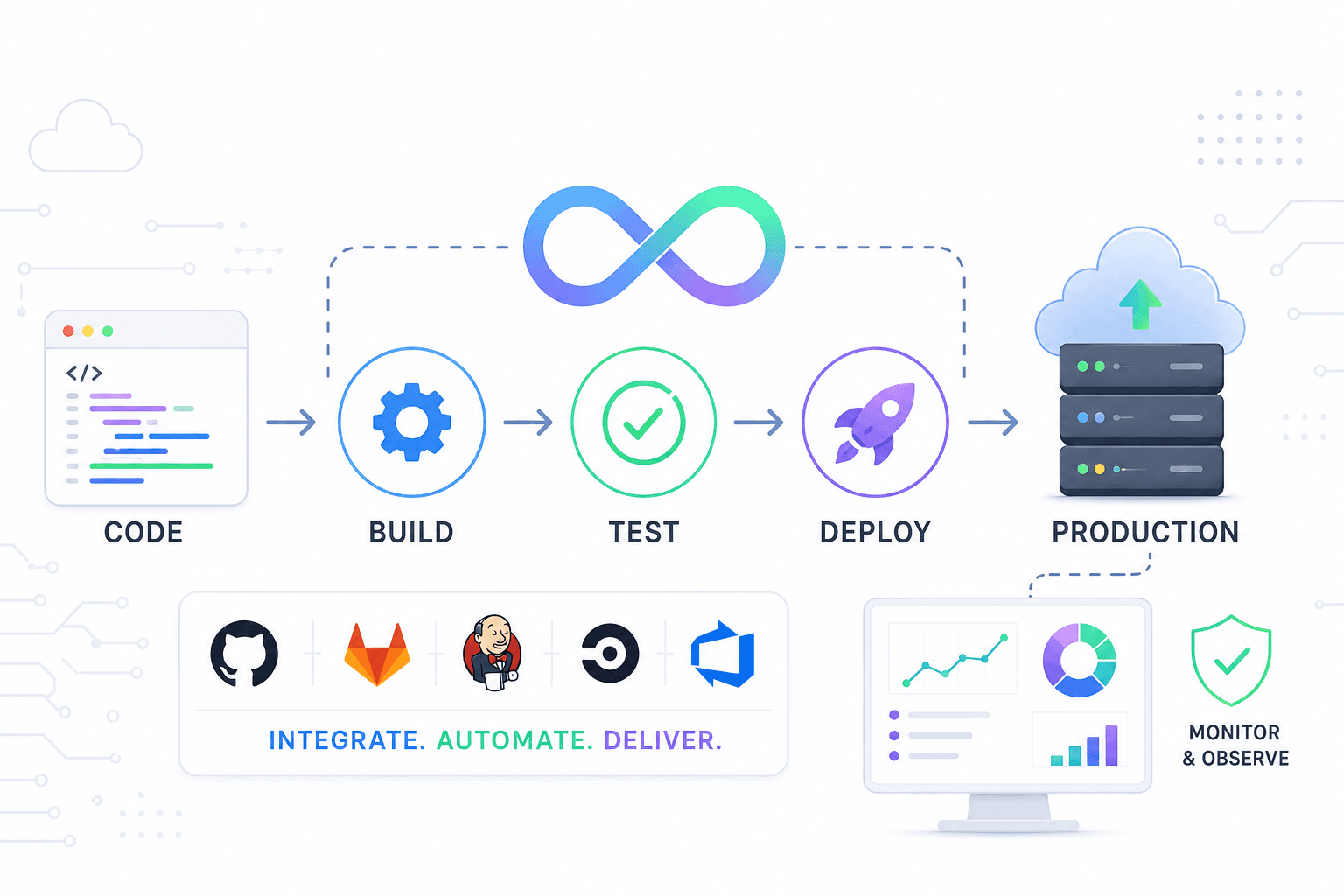
Integrating Testing Into CI/CD
Automated testing becomes even more valuable when integrated into deployment pipelines.
Before deployment:
- Run unit tests
- Run integration tests
- Validate code quality
- Build application
- Deploy
This process helps prevent defects from reaching production.
A strong CI/CD pipeline turns testing into a continuous quality assurance mechanism.
Benefits of Testing Complex Business Logic
Organizations that invest in testing business logic typically achieve:
- Reduced production defects
- Faster development cycles
- Improved system reliability
- Better developer confidence
Most importantly, testing protects the business processes that drive the application.
Final Thoughts
In Node.js applications, APIs and databases are important, but business logic is where the real value of the application resides.
Pricing engines, approval workflows, permissions, booking systems, and notification rules all represent critical business operations. Errors in these areas can have significant operational and financial consequences.
By separating business logic into dedicated services, focusing on behavior-driven testing, covering real-world scenarios, and validating edge cases, development teams can build applications that are both reliable and scalable.
Testing complex business logic is not just about preventing bugs—it’s about ensuring that the application consistently delivers the outcomes the business expects.