As technology leaders, we are constantly caught between AI marketing hype that promises effortless automation and the pragmatic reality of broken production deployments. The key to successfully shipping AI-powered software isn’t luck or aggressive prompt engineering—it’s having a grounded, technical understanding of what Large Language Models actually are. This guide cuts through the noise to define exactly what LLMs can do, where they fail, and how to architect reliable systems around them.
The Engine Under the Hood: Next-Token Prediction
At their core, Large Language Models are sophisticated statistical engines designed for one fundamental task: predicting the most likely next token given a sequence of input text. Despite the convincing illusion of reason, creativity, and intent, an LLM does not possess an internal model of objective reality or logical consciousness. Instead, it operates over a massive vector space built from trillions of text parameters, calculating mathematical probabilities based on patterns learned during training.
Understanding this probabilistic nature is essential for software architects and technology decision-makers. When an LLM generates code or answers an enterprise business query, it is not querying a clean database of facts or evaluating logic step-by-step like a classical deterministic program. It is generating text that closely resembles the high-probability patterns found in its training corpus.
An LLM does not retrieve facts; it reconstructs statistical patterns that resemble factual statements.
This fundamental distinction explains both the astonishing versatility of LLMs and their most frustrating quirks. Because they excel at pattern matching, they can instantly convert messy unstructured text into clean JSON, translate natural language into SQL, or draft boilerplate code. However, because they lack true semantic understanding, they will confidently produce syntactically flawless statements that are completely incorrect when pushed outside their statistical boundaries.
Where LLMs Shine: High-ROI Superpowers
While LLMs are not general intelligences, their ability to parse, transform, and generate human language makes them extraordinarily powerful when applied to the right engineering challenges. Knowing where LLMs yield high return on investment allows engineering teams to stop wasting development cycles on misaligned implementations.
The primary strengths of modern LLMs center on tasks involving natural language interpretation, structural conversion, and context transformation:
- Unstructured to Structured Data Transformation: LLMs excel at ingesting messy, heterogeneous inputs—such as customer support emails, medical notes, or raw PDF text—and converting them into strict, validated JSON schemas.
- Semantic Search and Retrieval Synthesis: When combined with vector embeddings, LLMs can digest disparate internal documentation and formulate coherent, context-aware answers to complex user queries.
- Developer Acceleration and Code Refactoring: LLMs serve as hyper-efficient pair programmers, capable of writing unit tests, explaining legacy codebases, generating boilerplate code, and translating algorithms across programming languages.
- Contextual Tone and Language Adaptation: Tailoring communication for specific audiences, summarizing dense technical whitepapers into executive summaries, and multi-lingual processing are core native capabilities.
When software teams treat LLMs as specialized text transformation engines rather than autonomous decision-makers, production applications achieve remarkable performance, speed, and business value.
The Hard Boundaries: Where LLMs Fail
Building resilient enterprise software requires knowing where a tool will break. Because LLMs operate probabilistically rather than deterministically, applying them to tasks that demand mathematical precision, ironclad logic, or perfect reproducibility often leads to system failure.
Engineers and technical decision-makers must account for these non-negotiable limitations:
- Hallucination and Silent Drift: LLMs will confidently state incorrect facts, fabricate library references, or cite non-existent API endpoints because the generated tokens match a convincing structural pattern.
- Mathematical and Logical Precision: Because arithmetic requires exact rule execution rather than token probability, pure LLMs consistently struggle with multi-step math, exact item counts, and complex state management without external tool assistance.
- Deterministic State Tracking: LLMs do not maintain state across invocations naturally. Relying on an LLM to reliably track long-standing application state or transactional workflows without external databases leads to unpredictable behavior.
- Context Window Degradation: While context windows have expanded dramatically, LLMs still suffer from the lost in the middle phenomenon, where critical details placed in the center of massive prompts are inadvertently overlooked.
Never rely on an LLM for operations where a single wrong output results in catastrophic data loss or compliance violations without deterministic verification.
The Enterprise Trap: Fluency vs. Accuracy
One of the greatest hazards in modern software development is confusing linguistic fluency with factual accuracy. Because LLMs write with an authoritative tone, executive stakeholders and junior developers often trust their output without sufficient verification. This phenomenon—the fluency trap—is responsible for numerous failed AI pilot programs.
Human beings are naturally biased to associate well-formed grammar, persuasive phrasing, and clean formatting with competence. However, an LLM possesses equal confidence when writing production-ready code and when making up nonexistent parameters in an API call. In production, a loud failure (such as a 500 Internal Server Error) is easily caught and handled by traditional error handlers; a silent failure (such as an LLM subtly altering a business logic rule in a financial summary) can persist undetected for months.
To mitigate this enterprise trap, software architectures must implement automated guardrails, strict output validation using schemas, and rigorous unit testing frameworks around LLM outputs. Never evaluate an LLM’s capability based solely on manual chat interactions; always evaluate it using structured, automated benchmarking metrics across hundreds of representative edge cases.
The secret to deploying LLMs successfully in enterprise environments lies in surrounding the probabilistic model with a deterministic architectural moat. Instead of expecting the LLM to know everything or calculate correctly on its own, modern software systems use the model as an orchestrator that interacts with existing databases, APIs, and business logic.
Key architectural patterns for augmenting LLM capabilities include:
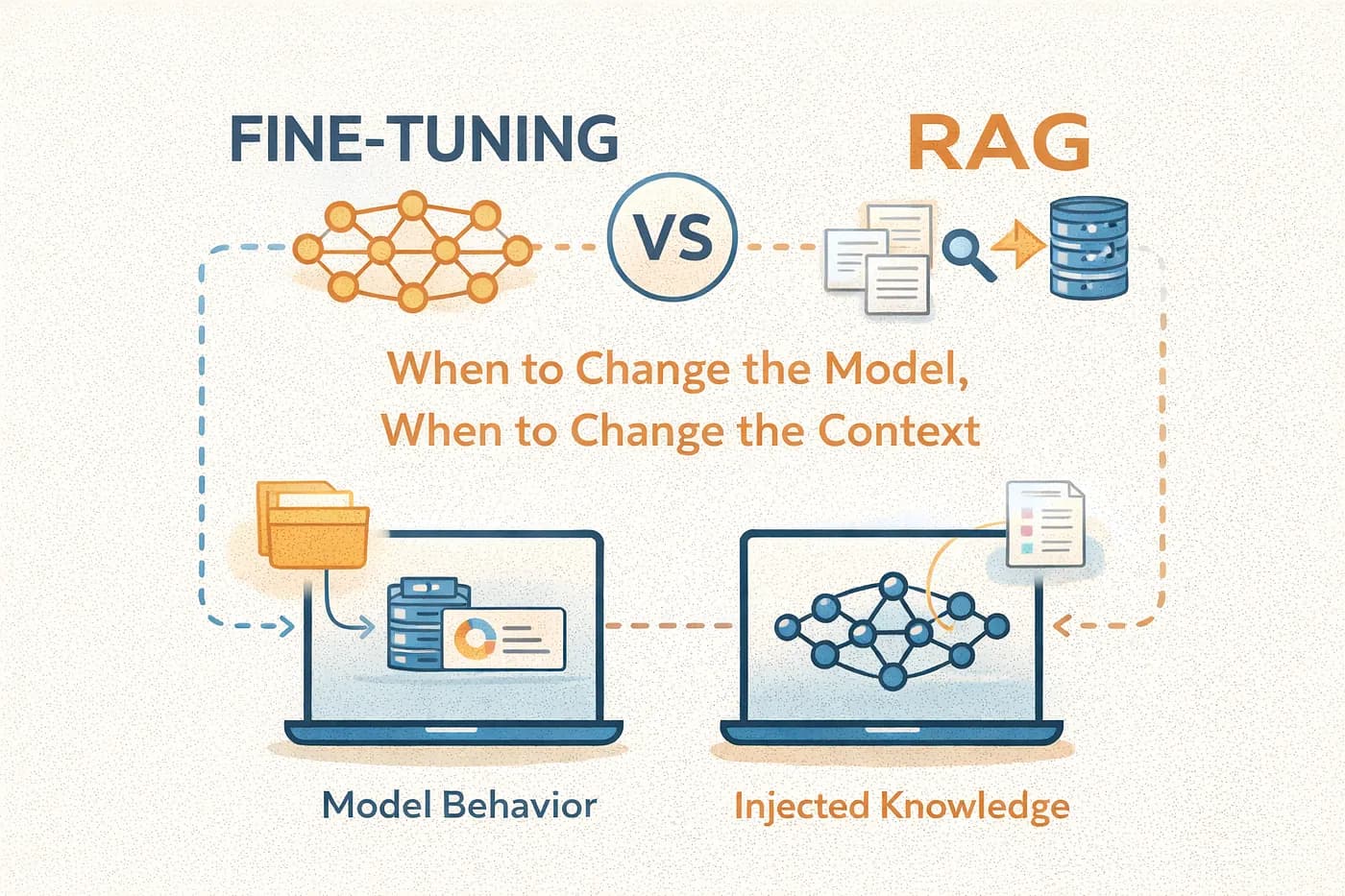
- Retrieval-Augmented Generation (RAG): By supplying relevant context from a vector database directly into the prompt payload, you ground the model’s responses in authoritative factual data, drastically reducing hallucinations.
- Function Calling and Tool Integration: Rather than forcing the LLM to perform calculations or look up current data, configure the model to emit structured JSON indicating which external API or database query to execute.
- Validation Guardrails: Implement runtime validation steps—such as JSON Schema validators, static analysis tools, or rule engines—to parse and verify model outputs before passing them downstream.
- Execution Sandboxes: When allowing LLMs to generate executable code or SQL queries, run the output inside isolated sandboxes with strict database read permissions.
By decoupling knowledge retrieval and computation from the language model itself, software teams construct robust, production-ready systems that capitalize on LLM strengths while completely isolating their structural weaknesses.
Building a Pragmatic LLM Strategy
Large Language Models represent a monumental shift in how software interfaces with unstructured human data, but they are not silver bullets. Successful enterprise adoption requires abandoning the fantasy that LLMs can act as unmonitored human replacements or infallible reasoning engines. By treating the LLM as a highly capable, probabilistic text transformation layer and surrounding it with deterministic software controls, engineering teams can achieve incredible automation while mitigating systemic risk.
The path forward is not to avoid LLMs out of skepticism, nor to adopt them blindly out of fear of missing out. Instead, technical leaders must establish clear boundaries, benchmark performance against strict datasets, and design software architectures where LLMs handle translation while classical software handles state, math, and verification.
At ViteTech, we help engineering teams and technology executives navigate these exact tradeoffs. Stop guessing what LLMs can do—start designing resilient, production-ready architectures that leverage their true strengths while guarding against their inherent limits.