Deploying LLMs to production requires moving past subjective, manual testing to a rigorous, automated benchmarking strategy. This guide outlines how software engineering teams can establish quantitative evaluation metrics, build reliable test suites, and automate LLM validation within their existing developer workflows.
Defining the Core Metrics: Beyond Simple Accuracy
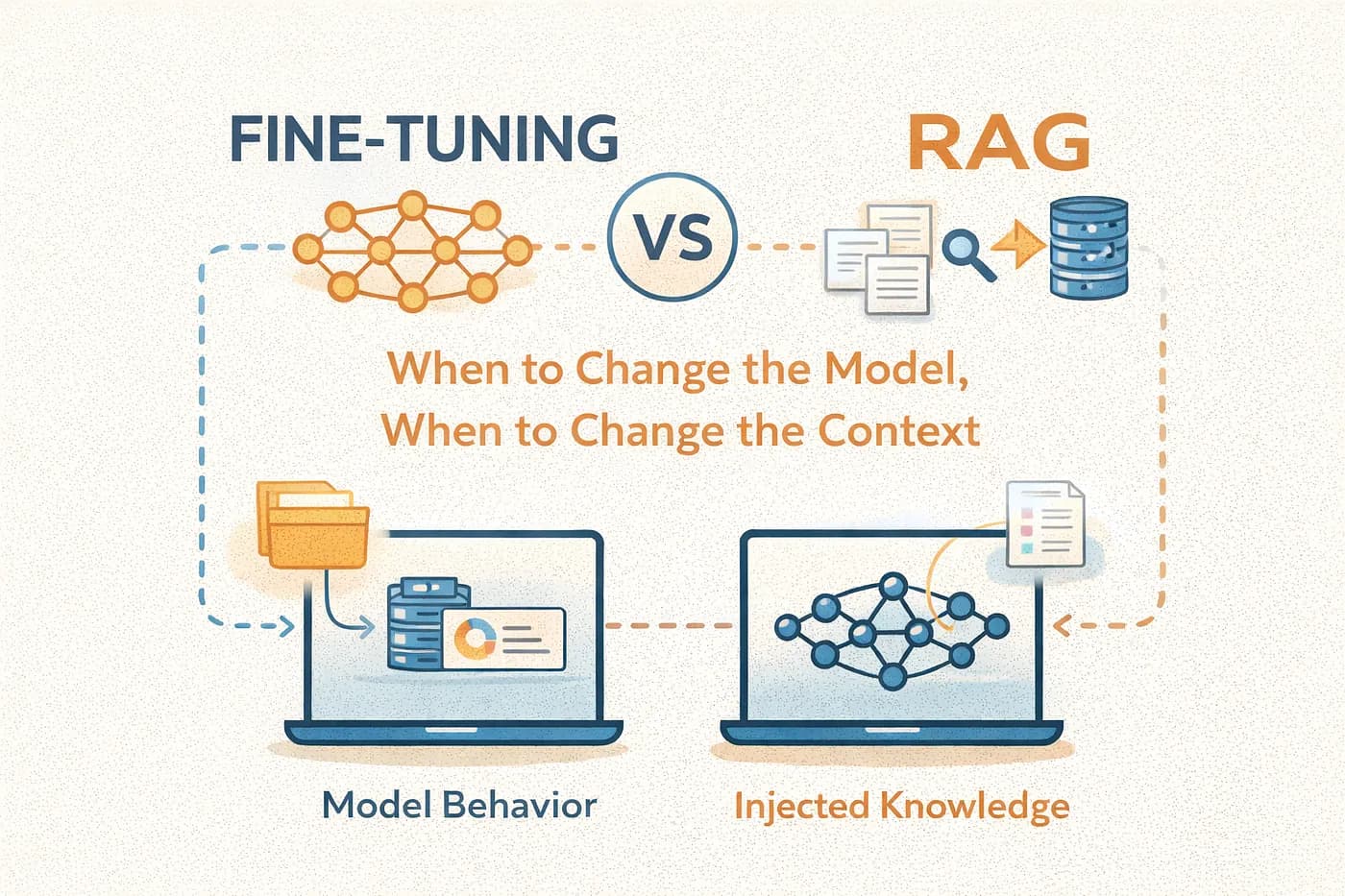
We must move past subjective “vibe checks” when deploying large language models (LLMs) to production. Evaluating a custom LLM—whether it is a fine-tuned model or an advanced Retrieval-Augmented Generation (RAG) system—requires a multi-dimensional approach to metrics. First, we have latency, which is typically split into Time to First Token (TTFT) and throughput (tokens per second). TTFT is critical for user experience in interactive applications, while throughput dictates overall system efficiency. Second, we must evaluate cost and efficiency, analyzing token consumption against business value. Third, accuracy and alignment remain paramount, but they must be quantified using domain-specific rubrics rather than generic benchmarks. Finally, developers must track safety and robustness, measuring how well the model resists adversarial attacks, prompt injections, and hallucination tendencies. By establishing clear, quantitative baselines across these four vectors, engineering teams can make data-driven decisions about model upgrades, prompt modifications, and infrastructure changes without risking regression in production environments.
Choosing the Right Benchmarking Frameworks
While academic benchmarks like MMLU (Massive Multitask Language Understanding) or GSM8K provide a general baseline of a model’s reasoning capabilities, they rarely reflect the specialized tasks your custom LLM will perform. For enterprise applications, developers must leverage modern evaluation frameworks designed for custom architectures. If you are building a RAG pipeline, frameworks like Ragas or TruLens are indispensable. These tools evaluate the “RAG Triad”:
- Context relevance: Is the retrieved information helpful and precise?
- Groundedness: Is the model’s response derived strictly from the retrieved context without hallucination?
- Answer relevance: Does the final output actually address the user’s initial query?
For agentic workflows, frameworks like Promptflow or LangSmith allow you to trace complex execution paths and measure success rates at each node. Relying solely on generic industry leaderboards is a recipe for failure; instead, use these frameworks to build a localized, automated testing harness that mimics your specific production workloads and constraints.
Curating the Golden Dataset: The Foundation of Valid Testing
The cornerstone of any robust LLM evaluation strategy is the “golden dataset”—a curated, high-quality collection of prompt-and-response pairs that represent the ground truth for your specific domain. Creating this dataset requires a deliberate mix of historical production logs, synthetic data generation, and human expert validation. To build an effective golden dataset, aim for at least 100 to 500 diverse test cases. Each test case should include a realistic user prompt, any necessary retrieval context, and the ideal target response. It is crucial to include edge cases, such as ambiguous queries, out-of-scope questions, and potential adversarial inputs, to test the model’s guardrails. This dataset must not remain static; it should evolve continuously as user behaviors shift and new edge cases emerge in production.
A model is only as reliable as the dataset used to validate it. Investing in human-annotated ground truth is the single most effective way to ensure your LLM behaves predictably.
By maintaining a rigorous, version-controlled golden dataset, your team can run regression tests with confidence before every deployment.
Implementing LLM-as-a-Judge Methodologies
As systems scale, human evaluation becomes an operational bottleneck. This has led to the rise of LLM-as-a-Judge, a methodology where a highly capable model like GPT-4 or Claude 3.5 Sonnet is used to evaluate the outputs of your custom LLM. To implement this successfully, developers must write highly structured evaluation prompts containing clear grading rubrics. Instead of asking the judge model for a simple binary “good or bad” score, provide a Likert scale (1-5) with explicit definitions for each point. For instance, a score of 3 might mean “the answer is factually correct but contains minor formatting issues,” while a 5 represents “flawless execution.” To mitigate common judge biases, such as position bias (favoring the first option in pairwise comparisons) or verbosity bias (favoring longer answers), you should swap the order of presented options and instruct the judge to focus strictly on conciseness and accuracy. When calibrated correctly against human reviewers, LLM-as-a-Judge can achieve over 90% alignment with human consensus, enabling rapid, cost-effective evaluation at scale.
Integrating LLM Evaluation into Your CI/CD Pipeline
To prevent performance regressions, LLM evaluation must be treated as a first-class citizen in your software development lifecycle. This means integrating your evaluation suites directly into your CI/CD pipeline. Whenever a developer modifies a prompt, updates the system architecture, or fine-tunes a model weight, an automated pipeline should trigger. This pipeline pulls the latest version of your golden dataset, runs the test cases through your evaluation harness, and calculates the target metrics. If the average groundedness score drops below your defined threshold, or if the 95th percentile latency exceeds acceptable limits, the build should fail. To achieve this without slowing down development, you can implement a tiered testing strategy:
- Run a fast, low-cost subset of 20 core test cases on every git commit.
- Reserve the full, comprehensive golden dataset evaluation for nightly builds or release candidates.
By automating this feedback loop, your engineering team can iterate rapidly without fear of silently breaking production behavior.
Wrapping Up
Moving custom LLMs from prototype to production requires a transition from subjective, “vibe-based” engineering to rigorous, metrics-driven development. By establishing multi-dimensional metrics, curating a dynamic golden dataset, leveraging LLM-as-a-Judge methodologies, and automating the entire process within your CI/CD pipeline, you build an engineering culture of predictability and trust. At ViteTech, we specialize in helping organizations design, benchmark, and scale robust AI systems. Implementing these evaluation patterns early in your development cycle ensures that your AI investments deliver consistent, measurable business value while minimizing operational risks.