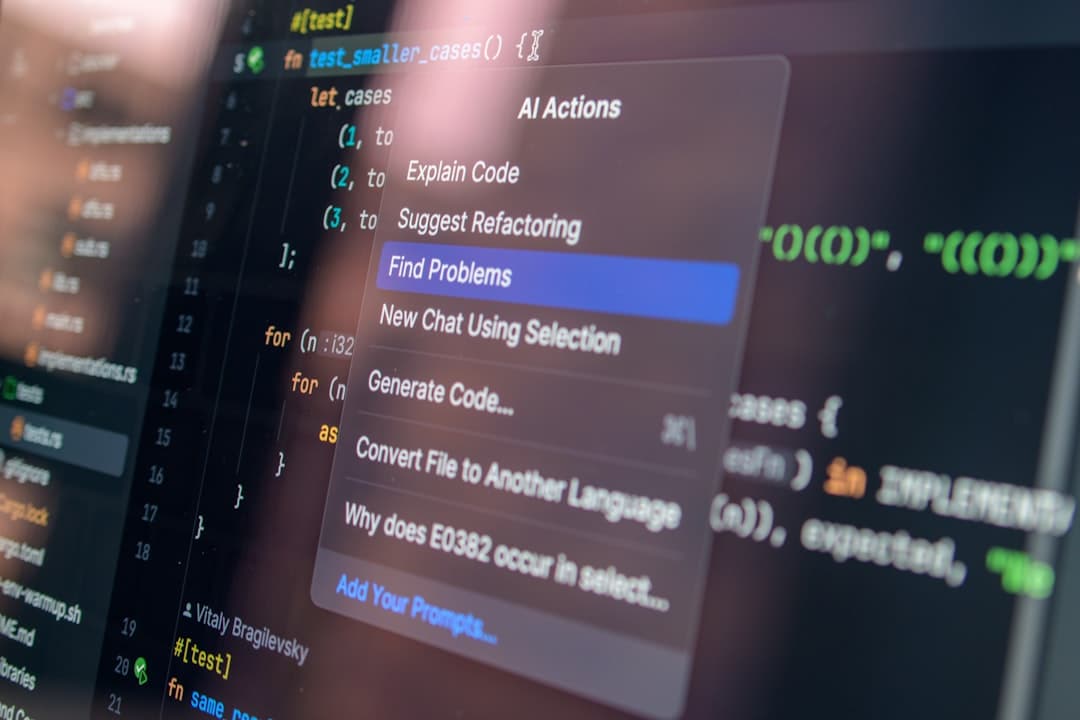
AI has fundamentally transformed how we write software. Just a few years ago, prompting an AI to “write a React component” felt impressive. Today, developers can hand an AI coding agent a much larger, multi-step objective:
“Find why the checkout API is returning a 500 error, fix it, add a test, and make sure the existing tests still pass.”
Once given this instruction, the agent doesn’t just generate static code—it acts. It navigates the codebase, analyzes relevant files, reads the existing implementation, applies targeted changes, and runs the test suite. If a test fails, it inspects the error output, refines its approach, and iterates until the solution is robust.
While this workflow can feel like magic, it is actually governed by a highly structured, repeatable system. Modern AI coding agents achieve this by combining a large language model (LLM) with deep codebase context, specialized tools, sandboxed execution environments, and a continuous feedback loop.
For developers, demystifying this architecture is crucial. By understanding the underlying mechanics, we can answer an increasingly important question: What is actually happening under the hood when an AI coding agent modifies our codebase?
From Code Suggestions to AI Coding Agents
The first generation of AI coding tools focused mainly on simple code completion. You would start typing const calculateTotal =, and the AI would suggest the rest. While useful, the scope of these tools was relatively narrow.
Modern coding agents operate at a completely different level. Instead of asking the AI to complete a single function, you can give it a high-level goal, such as:
“Implement pagination for the users page. Use the existing API, keep the current UI, add loading and error states, and update the tests.”
To execute this, the AI must understand more than just programming syntax—it needs to understand the entire application. It must autonomously answer critical questions about your codebase:
- Where is the users page located?
- Which API does it use?
- How are other pages implementing pagination?
- Where are the tests, and how is the test suite run?
- What coding patterns and architectural standards does the project already follow?
This leap from line-by-line suggestions to contextual, goal-driven execution is where the concept of an AI coding agent becomes essential.
What Is an AI Coding Agent?
An AI coding agent is a software system that pairs an AI model with developer tools and an execution environment to autonomously complete software engineering tasks.
The fundamental shift: A traditional chatbot gives you an answer. An AI agent takes autonomous actions to achieve a goal.
To accomplish these goals, a typical coding agent is granted access to a suite of capabilities that mimic a human developer’s workflow, including:
- Reading and searching code repositories
- Creating and editing source files
- Running terminal commands, builds, and test suites
- Inspecting Git changes and managing version control
- Accessing external documentation and APIs
- Connecting to third-party services
While specific features vary across different products, the underlying architecture remains the same: the AI model decides what needs to happen, and the surrounding agent system executes those actions in a secure environment.
This process is driven by what OpenAI describes as an agent loop. Instead of delivering a single, static response, the model evaluates the task and requests a specific tool action (such as running a test). The agent system executes the tool, feeds the output back to the model, and the model analyzes the results to determine the next step. This loop continues iteratively until the objective is fully met.