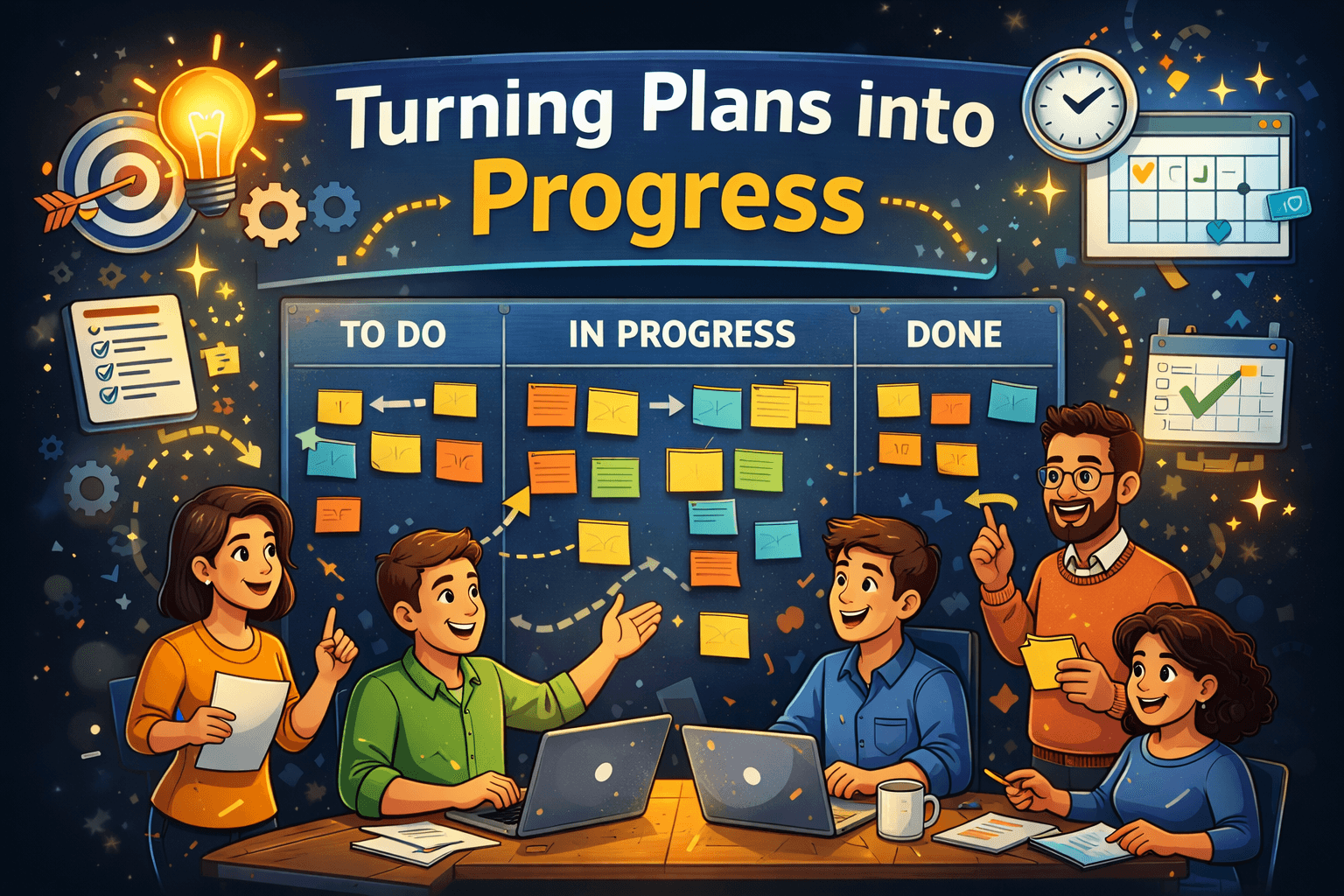
In today’s fast-moving digital world, having a plan is no longer enough. What truly matters is how quickly and effectively those plans are turned into real, measurable progress.
This is where Scrum stands out—not just as a framework, but as a mindset that transforms ideas into outcomes. Whether you’re building a product, managing a project, or improving team collaboration, Scrum helps bridge the gap between planning and execution.
What is Scrum?
Scrum is an Agile framework designed to help teams deliver value incrementally. Instead of waiting months to see results, Scrum focuses on delivering small, usable outputs in short cycles called Sprints (typically 1–4 weeks).
At its core, Scrum is built on:
- Transparency
- Inspection
- Adaptation
This ensures teams are always aligned, aware of progress, and ready to adjust when needed.
How Scrum Turns Plans into Progress
Traditional planning often stops at documentation. Scrum takes it further by embedding execution into every step.
1. From Ideas to Actionable Backlog
Every plan starts as a list of ideas, known as the Product Backlog.
These ideas are:
- Prioritized based on value
- Broken down into manageable tasks
- Continuously refined
This ensures teams always work on what matters most.
2. Sprint Planning: Focused Execution
Instead of tackling everything at once, Scrum teams:
- Select a set of tasks for the sprint
- Define clear goals
- Commit to achievable outcomes
This creates clarity and prevents overwhelm.
3. Daily Stand-ups: Staying on Track
Short daily meetings help teams:
- Share progress
- Identify blockers
- Align priorities
Small daily adjustments prevent big delays later.
4. Sprint Review: Delivering Value
At the end of each sprint:
- Teams showcase completed work
- Stakeholders provide feedback
This ensures continuous alignment with business needs.
5. Retrospective: Continuous Improvement
Scrum doesn’t just focus on what is delivered, but also how it’s delivered.
Teams reflect on:
- What worked well
- What didn’t
- What can be improved
This creates a culture of constant growth.
Why Scrum Works
Scrum is powerful because it embraces change rather than resisting it.
Faster Delivery
Deliver working outputs frequently instead of waiting for final releases.
Better Collaboration
Encourages communication across developers, designers, and stakeholders.
Improved Transparency
Everyone knows what’s happening and what’s next.
Adaptability
Quickly adjust to new requirements or feedback.
When Should You Use Scrum?
Scrum works best when:
- Requirements are evolving
- Fast delivery is critical
- Collaboration is key
- Continuous feedback is needed
It may not be ideal for:
- Highly predictable, fixed-scope projects
- Teams resistant to iterative work
Conclusion
Scrum is more than a framework—it’s a way to turn plans into continuous progress. By breaking work into manageable increments, encouraging collaboration, and embracing change, Scrum enables teams to deliver value faster and more effectively.
In a world where speed and adaptability define success, Scrum helps teams move from planning to doing—and from ideas to impact.