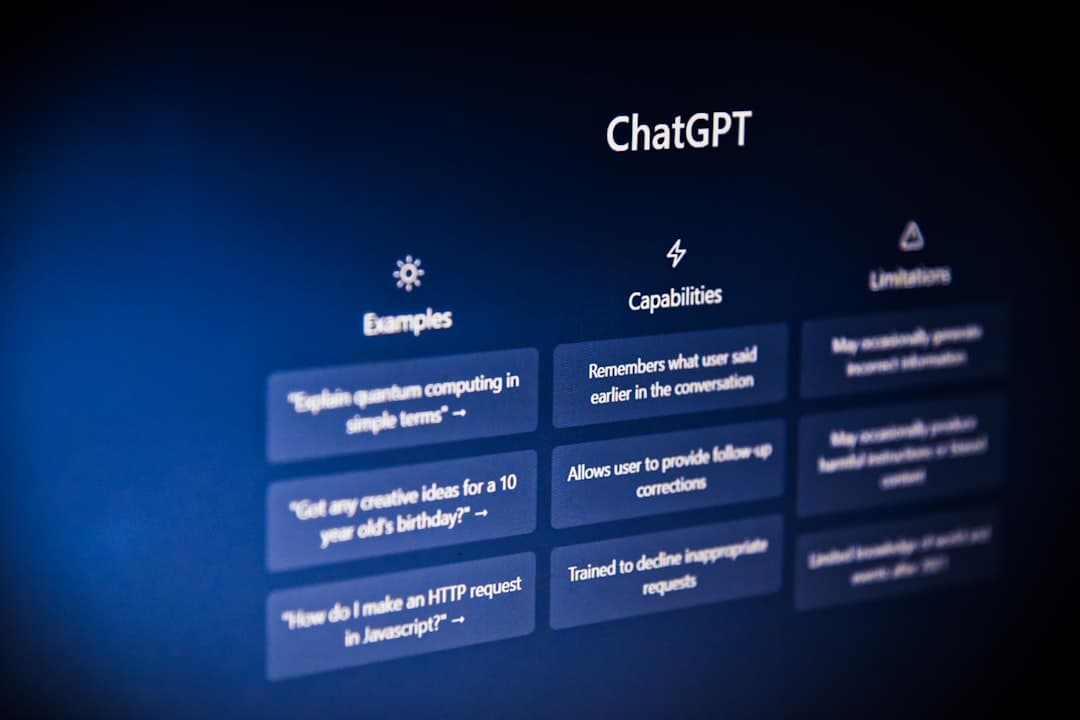
AI has become a regular part of software development. From fixing bugs to generating code, developers now have several AI tools to choose from. But what is the actual difference between ChatGPT and coding AI tools?
The simple answer: ChatGPT is a general-purpose AI assistant, while coding AI is designed specifically to support developers inside their coding workflow.
What is ChatGPT?
At its core, ChatGPT is an advanced conversational artificial intelligence model developed by OpenAI. Built on large language model (LLM) architecture, it is designed to understand context, process natural language, and generate highly coherent, human-like text. For software engineers, it acts as an on-demand, interactive technical partner.
While it is widely known for general writing, developers commonly leverage ChatGPT to:
- Understand complex programming concepts and decipher unfamiliar or legacy codebases.
- Debug errors and quickly diagnose cryptic stack traces.
- Generate and review code, from writing initial boilerplate to refactoring existing logic.
- Plan features and architecture by brainstorming system designs and integration strategies.
- Write documentation, including inline comments, API schemas, and readme files.
- Compare different technical approaches, weighing the trade-offs between different libraries, frameworks, or algorithms.
Ultimately, it is especially useful when you want to engage in rubber duck debugging—allowing you to talk through a complex problem step-by-step and deeply understand the underlying mechanics of why a specific solution works.
What is Coding AI?
Coding AI tools are purpose-built systems designed to assist developers directly within their existing environments. Unlike general-purpose language models, these tools integrate seamlessly into Integrated Development Environments (IDEs), leveraging the context of your active codebase, project structure, and open files to provide highly relevant, real-time assistance.
These specialized tools streamline the software development lifecycle by helping with:
- Intelligent code completion: Predicting and writing inline code as you type to speed up development.
- Boilerplate and component generation: Instantly scaffolding functions, classes, and UI components based on natural language prompts.
- Automated refactoring: Identifying code smells and suggesting cleaner, more performant, or more idiomatic implementations.
- Test generation: Automatically drafting unit and integration tests to improve test coverage.
- Contextual code search: Finding relevant files, APIs, and dependencies across your entire workspace.
- Multi-file editing: Orchestrating safe, coordinated changes across multiple project files simultaneously.
The ultimate advantage of coding AI is how naturally it aligns with your day-to-day development workflow, shifting the developer experience from tedious manual syntax writing to high-level system design and problem-solving.
ChatGPT vs Coding AI
Choosing the right tool depends on your immediate needs. While both leverage powerful language models, they are designed for different stages of the development lifecycle. Here is how their capabilities align:
- Primary Role: ChatGPT functions as a versatile, general-purpose assistant, whereas Coding AI operates as a specialized, developer-focused companion.
- Core Strength: ChatGPT excels at conceptual learning, explanations, and brainstorming, while Coding AI is built for writing and completing code at high speed.
- Environment & Integration: ChatGPT is ideal for high-level architecture discussions outside the editor, whereas Coding AI provides deep codebase integration directly inside your IDE.
- Versatility: ChatGPT seamlessly handles non-coding tasks (such as documentation, copywriting, or planning), while Coding AI remains laser-focused on the active software development workflow.
Intellectual Property and Enterprise Security Considerations
For engineering leaders and CTOs, the choice between ChatGPT and a dedicated coding AI often comes down to security, compliance, and intellectual property protection. Standard consumer versions of ChatGPT may use your prompts and code snippets to train future models, posing a severe risk of intellectual property leakage. While OpenAI offers enterprise tiers with data privacy guarantees, managing this risk requires strict organizational policies.
Dedicated coding AIs, particularly enterprise editions of GitHub Copilot or Tabnine, are built with corporate compliance in mind from day one. They offer robust options such as:
- Zero Data Retention: Ensuring that your proprietary code is never stored on external servers or used for model training.
- IP Indemnification: Protecting your organization against potential copyright claims arising from public code patterns.
- On-Premises Deployment: Allowing highly regulated industries to run code-completion models entirely within their private cloud infrastructure.
These features make dedicated coding tools much easier to approve through rigorous corporate procurement and security reviews, giving enterprise teams peace of mind.
Which One Should Developers Use?
Choosing between a general-purpose LLM and a dedicated coding assistant isn’t about finding a single winner; it’s about strategically aligning the right tool with the specific phase of your development lifecycle.
- Use ChatGPT for high-level conceptual work: Leverage general-purpose models when you need to explore architectural patterns, debug abstract system designs, learn new frameworks, or brainstorm implementation strategies before writing code.
- Use Dedicated Coding AI for active implementation: Deploy IDE-integrated assistants when you are in the flow of development. They excel at real-time autocompletion, refactoring existing blocks, generating unit tests, and navigating your project’s local context.
The ViteTech Take: Treat AI as an accelerant, not a replacement for engineering rigor. While these tools dramatically increase velocity, developer judgment remains the ultimate safeguard. Every line of AI-generated code must be thoroughly reviewed, tested, and aligned with your production standards before deployment.
The future of development isn’t about choosing between general LLMs and dedicated coding assistants. It is about strategic alignment—knowing exactly which AI tool to leverage for the specific challenge at hand.
When integrated thoughtfully into the workflow, both toolsets help engineering teams minimize cognitive overhead and boilerplate. Ultimately, this alignment allows developers to spend less time on repetitive syntax and more time solving high-value architectural problems.